
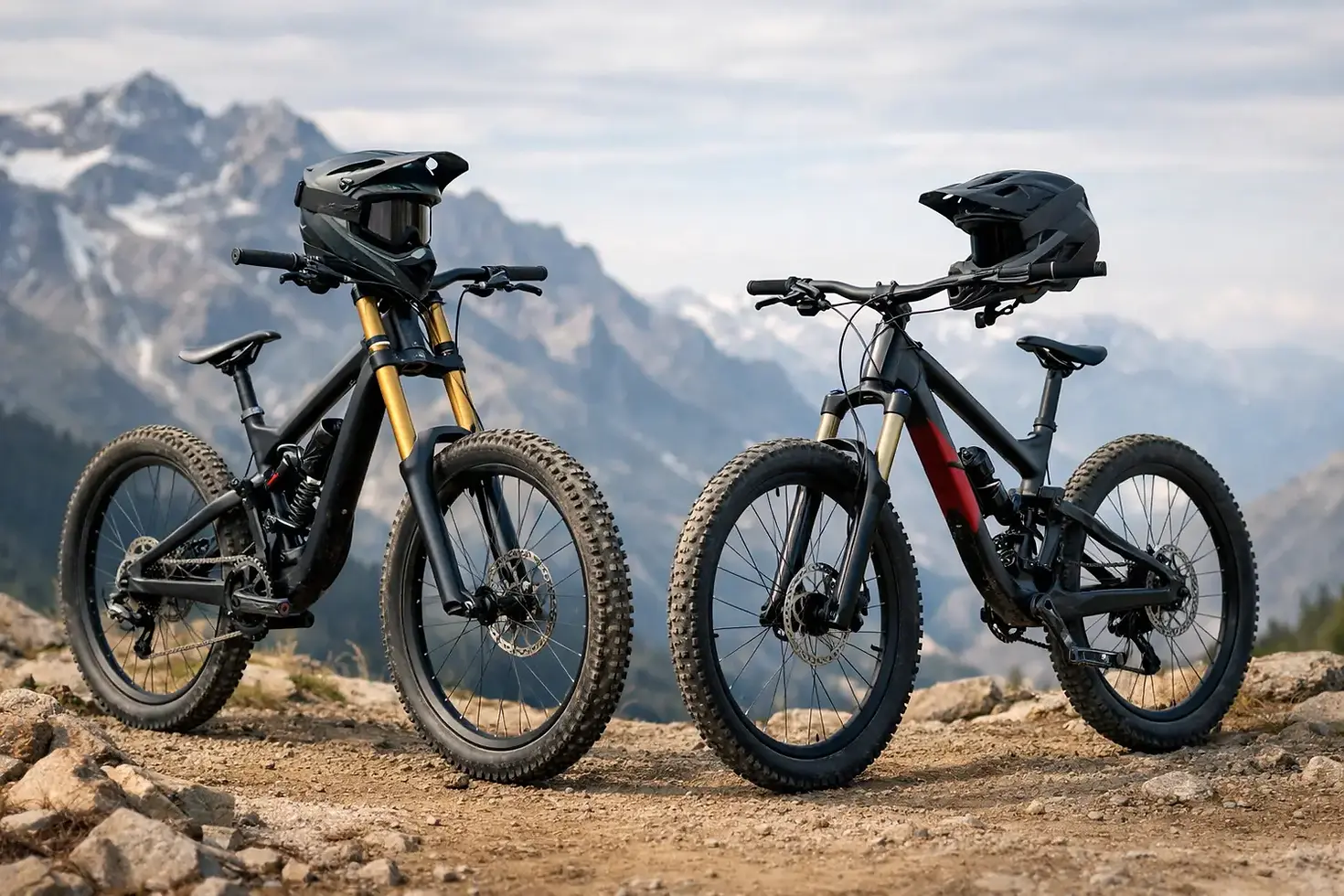
Downhill Bike Versus Enduro Bike
- Howler Bike Park

- Jun 17
- 6 min read
You feel it on the first real descent. The bike either begs for more speed or starts asking questions. That is the heart of the downhill bike versus enduro bike debate - not which one looks tougher in the parking lot, but which one matches the way you actually ride.
If your weekends revolve around lift laps, brake bumps, rock gardens, and repeated big-descending days, the bike choice matters fast. A lot of riders end up shopping by category labels alone, then wonder why their new rig feels sluggish on climbs or undergunned in rough terrain. The better move is to understand what each bike is built to do, where it shines, and where the trade-offs show up.
Downhill bike versus enduro bike: the real difference
A downhill bike is purpose-built for descending at speed. It usually packs 190mm to 200mm of suspension travel, a dual-crown fork, a long wheelbase, and geometry meant to stay calm when the trail gets steep, rough, and chaotic. It is a specialist tool. Point it downhill and it comes alive.
An enduro bike is the all-mountain bruiser. Most sit in the 150mm to 180mm travel range, with a single-crown fork, lighter frame, and geometry designed to balance descending confidence with the ability to pedal back up. Enduro bikes still charge hard on rowdy terrain, but they are built to do more than one job.
That difference sounds simple, but on trail it changes everything. A downhill bike wants chairlifts, shuttles, and gravity-fed terrain. An enduro bike can handle aggressive descents, then grind out the climb to do it again.
Where a downhill bike wins
A downhill bike is the right answer when descending is the whole mission. The extra travel smooths out repeated hits. The frame and fork stay composed in rough sections that can overwhelm lighter bikes. The geometry gives you more margin when things get fast, steep, or loose.
This matters most in bike parks, race settings, and terrain with sustained descents. On a proper downhill track, a downhill bike feels planted in a way an enduro bike rarely can. You brake less, hold lines better, and carry speed through chunk that would rattle your body on a shorter-travel setup.
There is also the fatigue factor. Over a full day of park laps, the downhill bike saves energy. Your hands, arms, and legs take less punishment because the bike is built to absorb more of the trail. That can mean better riding by lap six, not just lap one.
If your riding is mostly lift-accessed or shuttle-based, the downhill category makes a lot of sense. It is not overkill when the terrain demands it. It is the right tool.
Where an enduro bike wins
An enduro bike wins on versatility. It climbs. It pedals efficiently enough for big trail days. It still descends hard enough to satisfy riders who like steep, technical trails, drops, and rough features. For a lot of riders, that blend is exactly what they need.
If your typical ride includes an hour of climbing before the fun starts, a downhill bike becomes dead weight. Enduro bikes are lighter, easier to maneuver at lower speeds, and far less punishing when the route includes rolling terrain or punchy climbs. They are also easier to live with if you only own one bike.
That one-bike argument is real. Plenty of riders want something that can handle bike park weekends, local trail systems, enduro races, and after-work spins. A modern enduro bike gets you close enough in the rough while staying useful everywhere else.
For newer gravity riders, an enduro bike can also feel more approachable. It is usually easier to handle, easier to transport, and more familiar if you are coming from trail riding. It gives you room to progress without committing to a full downhill-only machine.
Suspension travel and geometry change the ride
Travel numbers get a lot of attention, but geometry is just as important. Downhill bikes are longer, slacker, and lower in ways that prioritize stability over agility. They want speed. The faster and rougher it gets, the more they reward commitment.
Enduro bikes still trend long and slack, but not to the same extreme. They are designed to corner well at a wider range of speeds and stay manageable on mixed terrain. That means they can feel more playful and easier to move around beneath you, especially on trails that are tight or less consistently steep.
Suspension kinematics matter too. Downhill bikes are tuned to stay composed under heavy impacts and repeated abuse. Enduro bikes have to split the difference between plush descending and efficient pedaling. That is why an enduro bike can feel firmer or more reactive in the same terrain where a downhill bike feels glued to the ground.
Neither is better in a vacuum. It depends on whether you value maximum control on descents or broader usefulness across different riding days.
Climbing is the deal breaker for most riders
This is where the downhill bike versus enduro bike choice usually gets settled.
A downhill bike can climb in the technical sense that you can pedal it uphill, but that does not mean you will enjoy it. The weight, suspension design, gearing, and overall geometry work against long climbs. If your local rides require earning every descent, a downhill bike will feel like a bad trade more often than a dream setup.
An enduro bike is still not a cross-country rocket, but it is absolutely built to climb. You can settle in, grind uphill, and still have enough bike when the trail points down. For riders in places with mixed terrain, that balance matters more than a few extra millimeters of travel.
Be honest about your ride routine. If 70 percent of your riding involves pedaling to the top, buy for the reality, not the fantasy.
Bike park days change the equation
This is where a downhill bike starts making a very strong case. Repeated descending on rough, purpose-built trails puts different demands on both rider and equipment. Bigger hits, more braking, more square-edge impacts, and more sustained speed all favor a downhill platform.
At a gravity-focused park, an enduro bike can absolutely work. A good one will handle a lot. But over a full day, especially on steeper or rougher lines, you will likely notice the limits sooner. More arm pump. More fatigue. More deflection in chatter and chunk. Less room for mistakes at speed.
That is why riders who spend a lot of time lapping gravity terrain often keep a downhill bike, even if they also own an enduro bike for trail rides. If park riding is your main thing, that extra capability is not just about going faster. It is about riding better for longer.
For riders planning a weekend built around downhill laps, skills progression, and purpose-built terrain, a place like Howler Bike Park makes the difference obvious in a hurry. On real gravity trails, the bike category you choose shows up in every corner, landing, and rough section.
Cost, maintenance, and practicality
There is no getting around it - downhill bikes are less practical for everyday use. They are more specialized, often heavier, and harder to justify if you ride a wide mix of terrain. If you only have garage space, budget, or travel plans for one bike, an enduro bike is usually the smarter buy.
Maintenance can also reflect usage. Downhill bikes are built tough, but the kind of riding they encourage can be hard on parts. Park laps and bike park terrain wear through tires, brake pads, and suspension service intervals quickly. Enduro bikes can rack up wear too, but many riders spread that use across more varied terrain and lower speeds.
Transport and setup matter as well. Enduro bikes are easier to pedal from home, easier to use on local loops, and generally easier to justify on any random ride day. A downhill bike often needs a destination, a shuttle, or a lift to make full sense.
So which bike should you buy?
Buy a downhill bike if descending is the whole point, most of your riding is lift-access or shuttle-based, and you want maximum confidence in steep, rough terrain. If you care more about speed, stability, and surviving repeated hard laps than pedaling efficiency, this is your move.
Buy an enduro bike if you want one bike that can do almost everything well, you pedal for a big part of your rides, or your terrain mix changes from week to week. It gives up a little downhill composure in exchange for a lot more freedom.
There is also a middle ground. Some riders think they need a downhill bike when they really need a burly enduro bike with smart tires, strong brakes, and suspension set up correctly. Others keep trying to force an enduro bike into full-time park duty when the terrain is clearly asking for more bike. The right answer is the one that fits your actual season, not your highlight reel.
If you are still stuck, ask yourself one simple question: do you spend more time getting to the descent, or repeating it? That answer usually points straight at the right frame.
Pick the bike that matches your riding, and every run gets better from there.


.png)